
It was an autumn afternoon in late 2020. My three oldest kids had just returned from their grandparents' house. They ran into my office, each child waving a twenty dollar bill.
"Look at what we got for helping Oma in the garden!" Their sweaty faces were beaming with pride.
"And how will you spend your newfound wealth?" I asked, already knowing the answer.
"I'm getting V-Bucks," 11-year-old Elowen announced. Her twin sister, Linnea, nodded emphatically.
"It's Robux for me," declared 9-year-old Hallden.
My children were eager to turn their real money into virtual currency. While I let them spend their earnings as they pleased, I struggled to see the economic value of this transaction.
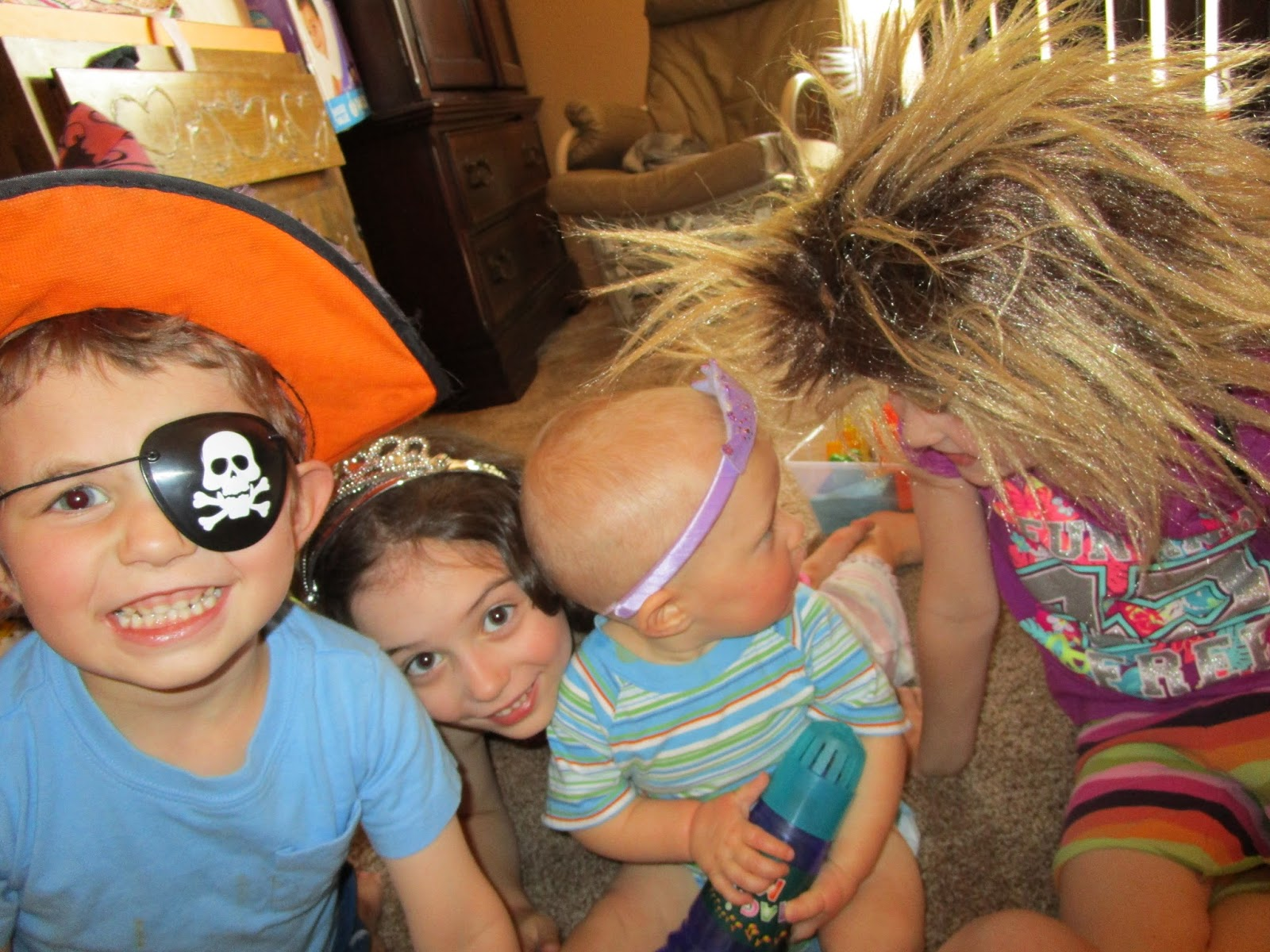
Hallden had a big smile on his face. "I'm going to buy a new pair of pants for my avatar!"
I looked down at his real pants that sported holes large enough to reveal his dirty knees. Not only had I failed to properly clothe my 9-year-old, but I was an enabler to his video-game addiction. It was an unfair battle. There was no competition between real pants and zombie-shielding, laser-shooting pixel pants. (Hallden later informed me that the virtual pants he wanted held neither of these powers.)
This was the part of the story (of my life) where I made an attempt at being a good parent. "Want to hear about the virtual goods I had as a child?" I asked.
My son shook his head. The twins, almost teenagers, rolled their eyes. Five-year-old Linden, who had been sitting quietly in the corner, looked up with interest. One out of four was enough to proceed.
In which I tell the kids the story of my first virtual good
The noise level in my fourth-grade classroom resembled the crescendo of cricket-wings on a warm Tallahassee evening. I folded my hands and placed them in my lap, waiting for Ms. Saunders to take control of the situation. This afternoon, however, Ms. Saunders did not immediately break into song (her usual crowd-control technique). She stood in front of her desk, bare arms at her side, and moved her smiling eyes from student to student. When her eyes met mine, I lowered my gaze. Like magic, the chaos that was my unruly classmates self-organized and a hush settled over the classroom.
"I ..have ..a ..se-cret," Ms. Saunders sang out.
"What ..is ..your ..se-cret?" the students responded in unison. Too shy to sing, I only mouthed the words.
Ms. Saunders motioned for us to lean in. She lowered her voice. "The secret," she said in a conspiratorial tone, "is that if you use a vocabulary word three times… then it belongs to you." She raised a finger to her lips. The only sound in the room was the whirling of the fan above our heads. "And the more words you own," Ms. Saunders continued, "the wealthier you will become."
There was a moment of stillness that, for me, held both gravity and light. Then the class broke out in raucous laughter. The bell rang and I was at once engulfed in a colorful stream of backpacks. I remained at my desk and closed my eyes, processing.
Ms. Saunders put a hand on my shoulder. The familiar smell of chocolate-covered mints hit my nostrils. (Ms. Saunders kept these coveted treats in a big glass on her desk.) My beloved teacher leaned over me, and I felt her warmth. "You must be very wealthy," she whispered.
The concept of personal ownership was foreign to me. My family moved to the United States when I was in the first grade so my father could complete a PhD in physical oceanography from FSU. His meager student stipend was the only source of income for our family of four (as neither he nor my mother, a biochemist, had work visas).
When we lived in Israel, my prized possession was an enormous block of salt from the Dead Sea which my father had brought home from a data-gathering cruise. I secretly licked it when nobody was looking, and my heart would fill with joy. Deaf to my pleas, my parents insisted that the salt block would remain behind when we moved.
Here, in the United States, I owned nothing. We lived in a furnished apartment where my sister and I shared a dirty mattress on the floor. All our clothes and toys were hand-me-downs.
My favorite red nightgown had another girl's name embroidered over the heart — "Lori". I wondered what kind of girl was wealthy enough to have her name — her own name — embroidered on all her clothes. I guessed that Lori was the type of girl who labeled all her belongings with a glittery marker. I pictured how she would count her possessions every night as she fell asleep. I imagined what it would be like to be her.
"You don't have to own things to be happy," my parents would always remind me. My logical brain understood the truth in those words, but there were still nights where I lay on my mattress and thought fondly of my salt block.
That afternoon in my fourth-grade classroom, everything changed. Ms. Saunders had revealed a secret that reframed my entire perspective on life. If knowledge was truly a form of wealth, then my family was royalty. Each meal in our household was served with a side of knowledge: interesting facts at breakfast, brain puzzles at lunch, and science documentaries after dinner. With this new mindset, I didn't need to be "Lori" — I was already Sarah Crewe from A Little Princess.
"If I am a princess in rags and tatters, I can be a princess inside. It would be easy to be a princess if I were dressed in cloth of gold, but it is a great deal more of a triumph to be one all the time when no one knows it." — Frances Hodgson Burnett, A Little Princess
I remember running home that afternoon and racing up the stairs to our apartment with a sense of urgency that puzzled my mother. Library books were strewn across my mattress. I grabbed Little Women and flipped fervently through the pages until I found a word I didn't know.
"Impertinent, impertinent, impertinent," I chanted aloud as if reciting a magical incantation. When the new word was mine (truly my own!), I sat back against the wall and smiled. My net worth was increasing.
In which my children learn nothing
"… and that was the story of my first virtual good," I told my children. They looked bored.
"Paper books are so last-century," Linnea informed me. "You need to modernize your narrative, Mom."
"Modernize your narrative" sounded like a term she had picked up from me, which helped soften the blow of my heart breaking.
"Can we go now?" Elowen asked. "Things don't stay in the item shop forever."
A spark of inspiration hit me. I convinced myself that Linnea was just demonstrating the definition of impertinent to her siblings, and I sat back down to write.
In which I attempt to write a blog post
Hallden's enthusiasm gave me new hope. I would write a blog post showing how technology skills could be as desirable as virtual goods in video games. Perhaps my message could reach an entire generation.
I enlisted my kids' help to learn about 21st century video game culture. I wanted to understand the motivation behind purchasing virtual goods. I wanted to understand their appeal. The kids and I came up with some rough correlations between virtual goods and tech skills…
Vanity goods — As my children explained, these are the virtual goods you buy for the sole purpose of impressing others. In terms of tech skills, perhaps these are the obscure languages that have esoteric appeal but little real-world value. An internet search for weird programming languages uncovers an unexpected bounty of vanity "skills": LOLCODE, Befunge, Glass, Piet, Chicken, Shakespeare, and more. I beg my readers to finish this article before conducting such a search, lest they fall into the rabbit hole of bizarre code.
Pets — My children liked buying virtual pets because "they are cute" and because we didn't have pets at home. There is a certain appeal to learning a tech skill that you don't get to use in your real life job. Engineers love to tinker, and it's rare to run into one who doesn't have a GitHub repository or two of pet projects. How tech skills are "cute" I will leave as an exercise for the reader.
Skins — Skins are superficial. Like most clothing, they help you fit in with your social circle but don't improve your game. To get tech skills that are "skins", you might watch an executive briefing on a topic. You will get a general understanding of the subject without enough depth to use it in practice. This is not necessarily a bad thing. The greater the breadth of knowledge you have, the better your understanding of the big picture. The wider your repertoire of mental models, the more perspectives you'll see when you approach a problem. I personally like to keep a variety of tech "skins" in my closet.
Armor and Weapons — Like armor and weapons in video games, a powerful and diverse arsenal of tech skills will help you and your teammates face adversity. Whether you're taking down pesky bugs or engaged in a "boss battle" with a challenging security threat, you'll need the right skills to fight the enemies of correctly-functioning code.
Leveling up ("pay to win") — Sometimes my kids would pay money to level up faster in their games. My initial reaction was that it was cheating. Shouldn't they put in the hard work to attain the level on their own? "Everyone's doing it," they insisted.
In the world of learning, paying to level up takes on a different context — and it's changed considerably since I first wrote this piece in 2021. Following a structured learning path was always a smarter, faster way to build skills than sifting through random online resources. But now there's a new kind of leveling up that didn't exist before: AI tools that let you bring an idea to life without first mastering the underlying foundations. Someone with curiosity and a willingness to iterate can build something real, and build genuine understanding through the act of making it. That's not cheating. That raises an honest question though: are you using AI to accelerate the formation of real understanding, the way a great textbook or a great mentor does — or are you bypassing the struggle entirely, in ways that will catch up with you later? The items in the shop are more powerful than ever. Whether they make you genuinely wealthier depends on how you use them.
Feedback loops — Even if you purchase the best weapon, you still need to learn how to use it effectively and work well with your teammates. The scoreboard helps you develop those skills by showing you where you stand today and what to improve. In software, the feedback loops that matter most aren't the ones that tell you how fast you're going — they're the ones that show you whether you're building something that holds. Code review, postmortems, test failures, production incidents: the discomfort of feedback is where growth actually lives. Collecting skills without exposing them to real challenge is like buying armor you've never worn into battle.
Tired of hearing their mother spout business/techie jargon, the kids turned their attention to crafting a perfect blog title: "From Noob to Pro: Level Up with Tech Skills." They had enjoyed answering my questions about video games, and I was grateful that they had allowed me a glimpse of their world.
There is so much pressure in this industry to skill-up — and that pressure has, if anything, intensified as AI reshapes what "skilled" even means. But I often wonder if we can get better results in our learning journeys with better route planning. When skills are tied to clear objectives, we become intentional about learning. We differentiate "vanity" skills from "armor and weapons." We expand our breadth of knowledge with "skins" and "level up" — responsibly — with greater depth. Feedback loops help us continuously improve, so long as we're honest about what they're measuring.
In which I learn something
The kids went happily upstairs to play video games, but I sat at my desk wondering whether to classify the proposed blog post as a success or failure. A very fine line lies between deliberate and contrived, and I couldn't help feeling that there was something superficial about the concept of collecting tech skills (or vocabulary words or virtual goods) for the purpose of impressing others and increasing your net worth.
I thought of a book I was reading to Linden at the time — The Bear That Wasn't (Frank Tashlin, 1946).
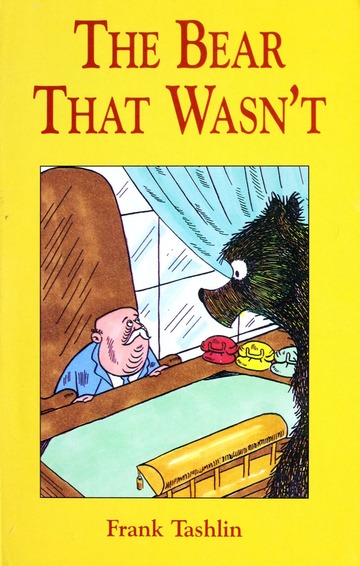
In the book, a bear wakes up from hibernation to discover that a factory has been built around him. Without hesitation, the foreman grabs the bear and puts him to work. Whenever the bear protests that he's a bear, he is told that he is "a silly man who needs a shave and wears a fur coat." After hearing this same statement from the entire hierarchy of executives in the factory, the bear decides that it must be true. My proposed blog post felt a lot like that bear.
I listened to the kids giggling at Hallden's new virtual pants. They were playing together and having fun, and at that moment there was nothing in the world more beautiful. The music of their laughter took me back to my youth. It reminded me of the joy I had felt so long ago at every vocabulary word I could make "my own." A couple years later, the same enchanted feeling had returned when I got "hello world" to display in my first computer program (written in GW-BASIC!). As an adult, things were more complicated. The magic was buried beneath objectives and outcomes, strategy and execution, much like the bear couldn't be his authentic self at the factory.
That was five years ago. In trying to show my kids how I saw the world, they ended up showing me something in return. That afternoon reminded me of something I know to be true even when I forget to say it out loud: the best reason to learn a skill is the delight of making something with it. Not the line it adds to a resume. Not the metric it moves. The thing itself — brought into existence by someone who was curious enough to try.
Linden is ten now. He's been vibe-coding educational browser games in his spare time — not for school, not for a grade, but because he wants to make things. He recently ran a science fair experiment comparing AI coding tools. The quiet kid in the corner has turned out to be the one who most naturally inhabits the world Ms. Saunders was describing: the one who never needed permission to start making things his own.
In a moment of inspiration that smells of chocolate-covered mints, I realize that I have the opportunity to continue where Ms. Saunders left off. The true purpose of learning for a software engineer is not in collecting technology skills like trophies to move up on a virtual scoreboard. It lives in the delight you get from ambling through the learning journey, finding unexpected surprises, and using your skills to make meaningful connections with others.
I carry that belief into how I build teams. The engineers I've seen grow the most weren't the ones relentlessly chasing the next level. They were the ones who got absorbed in a problem, who wanted to understand something not because it was on a learning path but because it was interesting. My job as a leader has always been less about directing that energy and more about not extinguishing it — keeping the scoreboard in its proper place, which is useful but not central.
I turn my attention back to my laptop. In an act of rebellion, I open a new project and pull up my favorite AI coding assistant. We're going to build something I have no particular reason to build. Why? Why not.